What Winning Brands Know Before They Ever Pitch a Distributor
The brands that scale consistently - the ones that earn distributor priority, generate real velocity, and attract acquisition interest - don't get there by accident. They get there because they answered three questions before they ever walked into a distributor meeting.
Most brands skip this step. They focus on the product, nail the branding, and head into distribution with momentum and optimism. And then six months later they're sitting in 100 accounts and wondering why nothing is moving.
The good news is that the brands that figure this out can change the trajectory of everything that comes after. Distribution is a force multiplier. When it has something real to work with, it works. The three questions below are where that starts.
The Pattern Worth Recognizing
The brands that struggle in distribution typically share the same story. They show up with a great product, cool branding, and a dream — but no clear consumer, no clear competitive set, and no clear reason why someone switches to them. They expect the rep to figure it out.
The rep can't. A distributor's job is to sell and scale what's already working. They have hundreds of brands in their book and finite time to sell them. The brands that make the rep's job easy get attention. The brands that make it harder get deprioritized — not out of malice, but out of necessity.
The market has a way of making this clear over time. The brands that recognize the pattern early are the ones that can do something about it.

How Winning Brands Approach It
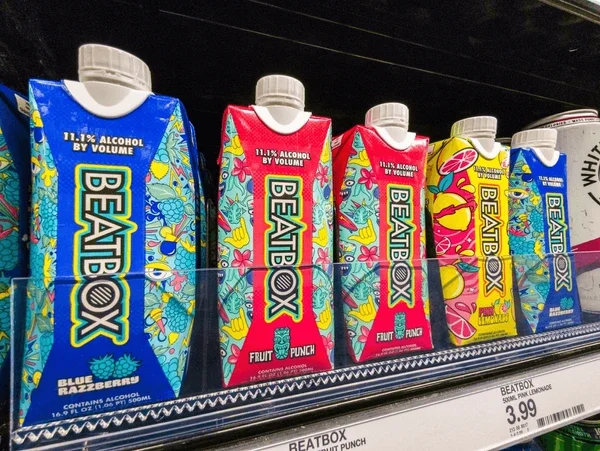
Look at BeatBox. Spirits based, party occasion, acquired by Anheuser-Busch for $490 million.
That brand didn't land a $490 million acquisition by accident. Distributors didn't manufacture scale out of thin air. They scaled it because BeatBox knew exactly who their drinker was, what they were already drinking before BeatBox came along, and why those drinkers would switch. The distributor's sales pitch wrote itself.
That's not a distribution story. That's a positioning story.
Winning brands give distributors a blueprint built on a defined target audience and a clear value proposition. BeatBox could answer three questions clearly before they ever pitched a distributor. Here's what those questions are and what a strong answer looks like.
The Three Questions
1. WHO ARE WE SELLING THIS TO?
Name a specific drinker. Not a demographic. A person with a real reason to choose your brand. BeatBox knew their drinker grew up on Riptide Rush and Hi-C. They weren't trying to convert a Chianti drinker. They built a brand for someone who had never found their drink yet, and they spoke to that person so clearly that the brand became a cultural touchstone for an entire generation of legal age drinkers.
The more specific the answer, the stronger everything downstream becomes - the sales story, the account strategy, the rep's pitch. Specificity is a competitive advantage, not a limitation.
2. WHAT ARE WE SELLING AGAINST?
What is your target consumer currently drinking? That defines your real competitive set and drives every strategic decision that follows - price point, package size, where you live in the account.
BeatBox wasn't competing against craft beer or premium spirits. They were competing against the cheap beer and hard seltzer already in that tailgate cooler, and they priced and packaged accordingly. A rep needs a comp. A buyer needs a set to put you in. Knowing your real competitive set gives you both - and gives the rep a story they can tell in the field without calling you first.
3. HOW ARE WE SELLING IT?
Why does someone drink your brand instead of the one they're already buying? That is the distributor rep's sales pitch. One sentence. The brands that can answer this clearly give their reps a tool they can use on every sales call in every market without any additional support.
BeatBox's pitch was simple - it's the most fun drink in the cooler for people who want something different. That sentence traveled. That's what distribution scale looks like in practice.
What This Means For Your Brand
Before you sign another distributor, before you hire fractional sales help, before you launch another SKU — answer these three questions. Write the answers down. The brands that can answer all three clearly don't have to chase distributor attention. They earn it.
Distribution doesn't build brands. It scales them. Give it something worth scaling and it will.
If you're ready to get clear on what your brand is, who it's for, and what that means for your product strategy, distribution approach, and long term positioning, let's talk.